Albuquerque in 6 Hours 25 Minutes
TRIP REPORTSHORT TRIP
Matthew Wietstock
11/18/202515 min read
City Highlights
Location: Albuquerque, New Mexico, USA
Population (Metro): 960,000
Known for: Largest city in New Mexico, Old Town Albuquerque, home to University of New Mexico, Albuquerque International Balloon Fiesta, home to Gathering of Nations
Weather during visit: 18-25ºC (64-77ºF)
Time in Place: 6 hours 25 minutes
Amid the sprawling Sonoran Desert and southern Rocky Mountains, New Mexico has been nicknamed “The Land of Enchantment”, and for good reason. From the ancestral Puebloan dwellings scattered across the state, to the largest gathering of hot air balloons in the world, and the most UNESCO World Heritage sites of any state, there are reasons historic and modern to visit this unique place. Most travellers passing through the state visit or enter through Albuquerque, the largest city in New Mexico, and an important piece of New Mexican culture.
I visited Albuquerque for the first time in the spring of 2025 as part of an effort to visit all 50 US states (a project which is still underway but has seen significant progress this year). I intended to see what made the city special in as short of a trip as possible, and while I may have missed the mark a bit on this trip, I can understand part of the uniqueness surrounding New Mexico compared to other desert cities I’ve visited like Phoenix. While blatantly not one of my favorites, Albuquerque still had moments where aspects shined through, often in the most unexpected ways.
Arriving in Albuquerque
Getting to Albuquerque
Driving to Albuquerque is rather easy as it sits at the junction of I-25 and I-40, each passing near or through the city center. This continues a long and important history of roads in the city as it lies along the famed Camino Real, a Spanish Royal Road connecting the city directly to the former colonial capital of Mexico City. The city also lies along former Route 66 directly as a result of political infighting by a lame duck governor moving the route from Santa Fe in the 1920s, leading to the city’s rise as the largest in the state. The city receives intercity bus service from Greyhound.
Rail has played an incredibly important part in the development of the city, thanks in large part to its proximity to Santa Fe as the former headquarters for the Santa Fe Railroad. Today, the Burlington Northern Santa Fe (BNSF) Railway still operates a yard in the city. Passenger rail also runs through the city via Amtrak on their Southwest Chief service, operating between Chicago and Los Angeles daily with one train in each direction. Albuquerque is also home to one of the most unique commuter rail systems in the United States with the Road Runner Express, named after the state bird. The service runs from Santa Fe through Albuquerque south to terminate in Belen, making three stops in Albuquerque as part of the line’s 15 total along its 156 km (97 mi) route. The route is mildly successful with an average daily ridership of 2,600 per weekday, and the line has continued to add service as it s operator, Rio Metro, attempts to move the line to all-day use.
For many of the city’s visitors, they will enter the sun-kissed city via Albuquerque International Sunport. As the largest airport within New Mexico, it also serves as the primary airport for Santa Fe (which does have its own smaller commercial airport) and Los Alamos. ABQ has service to much of the US from east coast cities like New York and Atlanta to west coast cities like Seattle and Los Angeles. The Big 4 US airlines provide service to most of their hubs, as do smaller carriers like Alaska, JetBlue, and even Sun Country. One of the most unique carriers at ABQ, Advanced Air, provides Essential Air Service through contract with either the US DOT or State of New Mexico to smaller outlying cities around the state like Carlsbad, Las Cruces, and Silver City.
Sunport has long been recognized as an incredibly nice airport, annually ranking highly in passenger satisfaction, and I can understand why after visiting. Stepping off the jet bridge into the B Concourse I noticed the difference immediately. Most US airports look the same, with the main differences being primarily the age instead of the actual furnishings or overall design. Even the nicest airports I’ve visited in the US, like Salt Lake City and Detroit, look broadly similar to other airports built around that timeframe. Sunport is different.
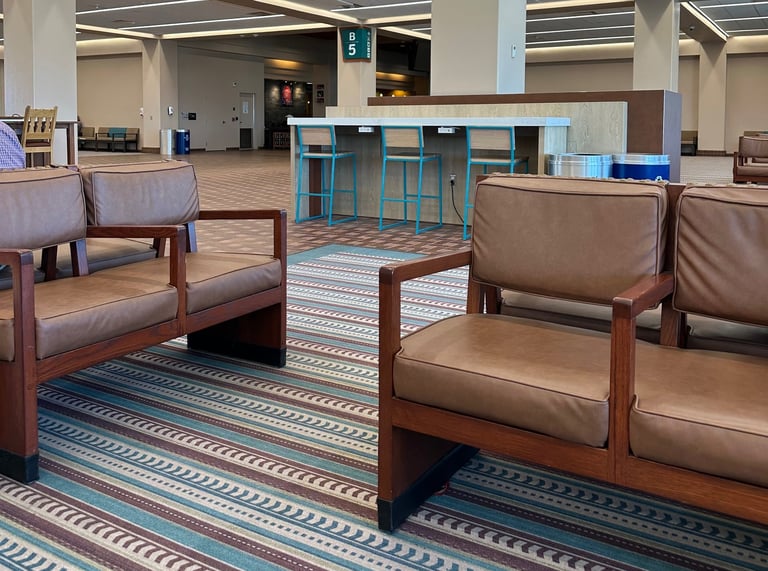
The airport leans wholeheartedly into the New Mexican design-style combining Native American and Spanish design elements into the various fixtures and architecture of the building. It is designed in the Pueblo Revival style with its low-lying structures making use of natural lighting and beam construction. The carpets around the concourses have Tiwa designs, with further nods to the local Native cultures from the region in the art located within the terminals. Even the seating is unique with faux-leather cushions and wood benches replacing the all-too-familiar steel and leather seats found at any airport between Seattle and Fort Lauderdale. The terminal houses a good mix of different shops and restaurants along with other travel necessities like an abundance of outlets and different types of workstations. I also appreciated how clean and well-maintained the facility felt; I did not notice any carpets that seemed to need vacuuming or any out-of-service furnishings.
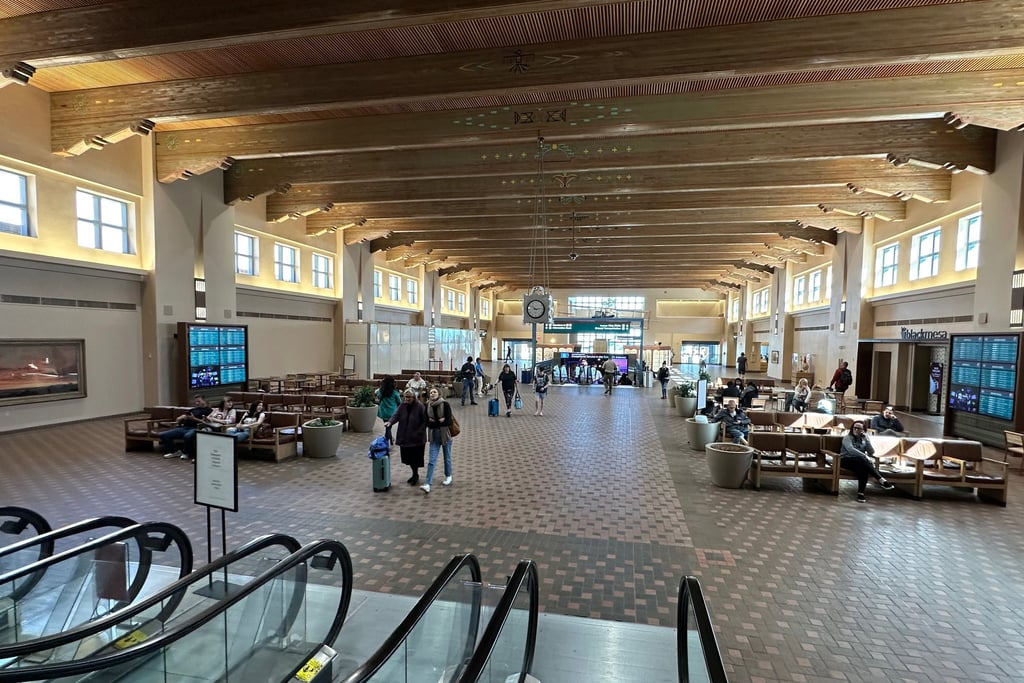
My favorite area of the airport, however, was not the concourses but the main arrivals and departures hall. The area reminded me more of a historic train station than it did a modern airport, but in the best possible way. Rows of the aforementioned cushioned benches were available for waiting passengers, along with plenty of departure boards for flight information. If you were ever curious about the time, simply look up at the large clocking hanging in the middle of the hall, well illuminated by the dozens of windows allowing lots of natural light in. Also illuminated by these lights are the carved wooden beams for the roof structure. Down the escalator bank at the end of the hall into the arrivals area is a large tourist information desk with plenty of brochures with things to do in the region. After snagging a booklet form the desk I made my way outside and waited for my ride to appear.
Getting Around Albuquerque
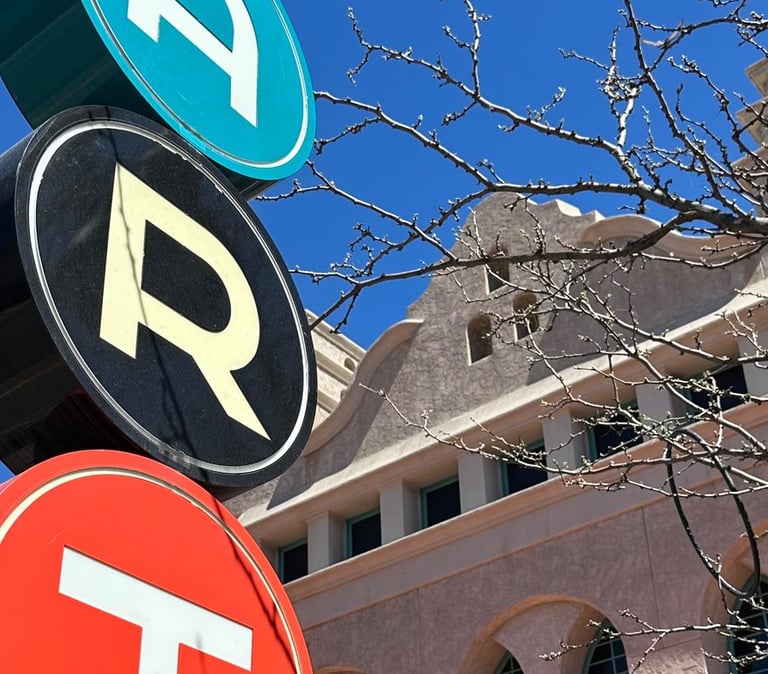
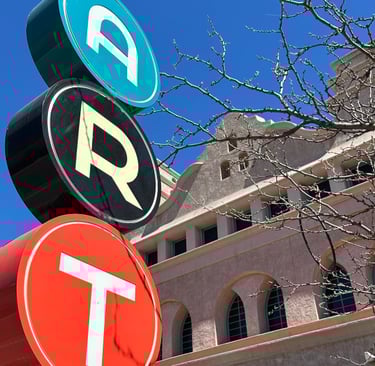
One of the surprises of this trip for me: Albuquerque has a pretty good bus system. For starters, it’s free. It’s also fairly good for service frequency, at least on its most popular routes, with 30 minute headways on some (non-BRT) routes. ABQRide is the local operator with 40 routes around the region and an average 24,400 daily weekday riders as of Q2 2025. ABQRide also operates the Albuquerque Rapid Transit BRT system, branded as ART with a rather neat 50’s neon aesthetic. This system primarily runs along Central Avenue through the length of downtown and connecting other important areas of the city like Old Town and the University of New Mexico. Another important route is the 50, which directly connects Alvarado Transportation Center downtown with the University of New Mexico and the Sunport.
At Yale and Central I disembarked the standard bus to transfer to ART. I could have ridden further into town before transferring, but I was curious to see what the BRT system was like, and this seemed like a good spot to check out the dedicated lanes as the route made its way into downtown. ART runs in dedicated lanes along the majority of its route with streetcar style stations along the way. I saw a lot of busses running on the ART, more than standard on many of the US “BRT” systems, with what seemed to be 12 minute headways. The buses used on the routes were fairly standard buses without many of the bells and whistles of other BRT systems like bike racks and increased standing space, but with ART nailing (for the most part) the fundamentals, I cannot complain too much. About 35 minutes after departing the airport, I had arrived at my first stop of the day, Old Town Albuquerque.
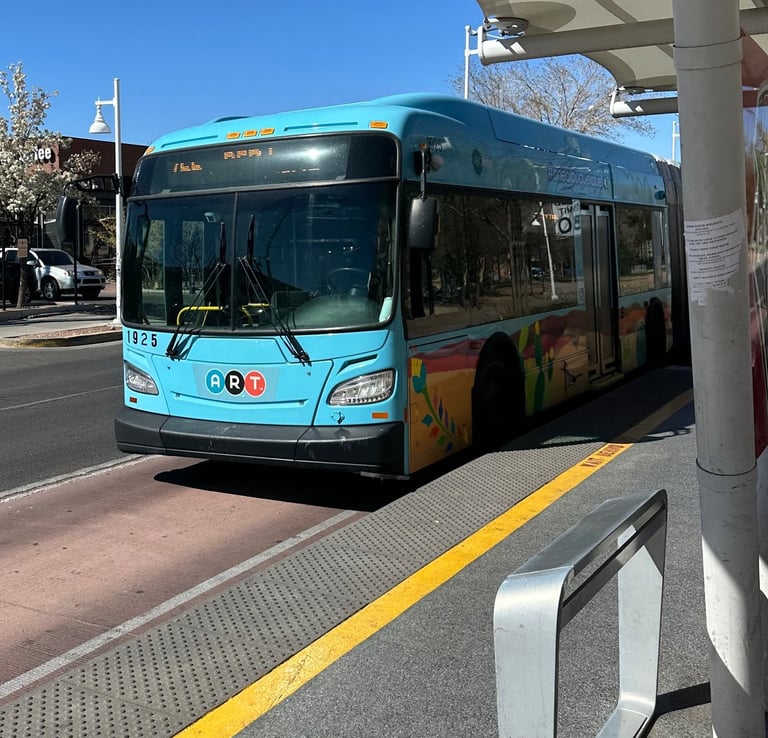
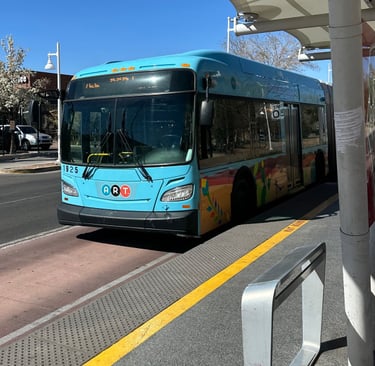
The bus stop for Sunport is located right outside the baggage claim area, rather convenient for travelers though there is not much in the way of passenger amenities other than some benches and a sign post. The bus that arrived was a rather standard New Flyer model, typical of other US and Canadian cities like Boston and Phoenix. It was nice to simply say “hello” to the operator and not have to pay a cash fare or try to tap a card on a fare box that never seems to be working. After a brief wait for the scheduled departure time, the operator and myself were off. We picked up a few other passengers along the way, especially as we got closer to the university.
Cultural Influences
Albuquerque is an old town, first founded in 1706 along the banks of the Rio Grande in the Spanish province of New Mexico. The city was founded to act as a seat of government for the Rio Abajo (lower river) area and quickly grew as an agricultural center. When Mexico declared its independence from Spain in 1821, New Mexico and Albuquerque joined and remained part of the nation until after the Mexican-American War when the territory was ceded to the United States. Other than a very brief stint where it was the capital of Confederate New Mexico, Albuquerque has been part of the United States since. When the railroad arrived to Albuquerque in 1880 it was located about 2.5 km (1.5 mi) to the east in “New Town” which then became the business center for the growing city.
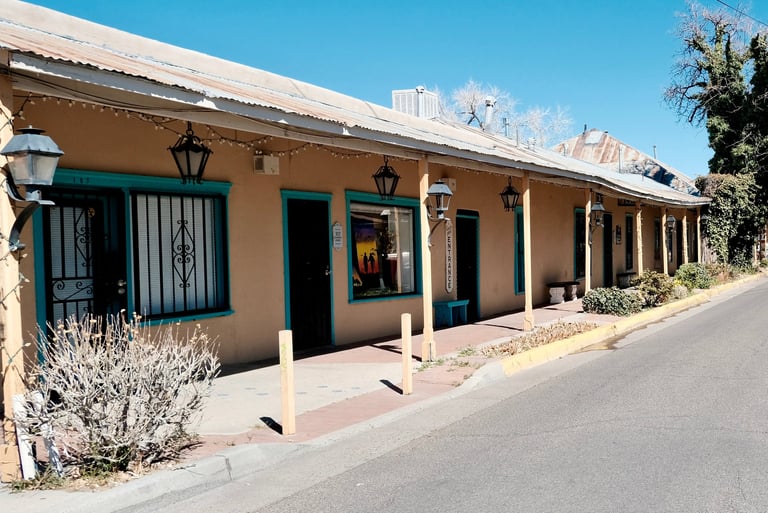
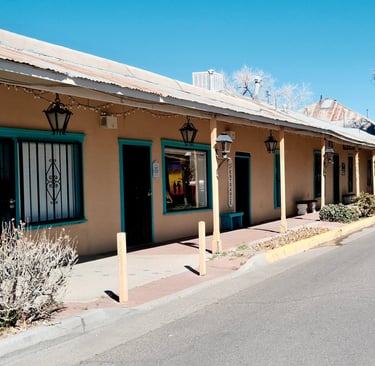
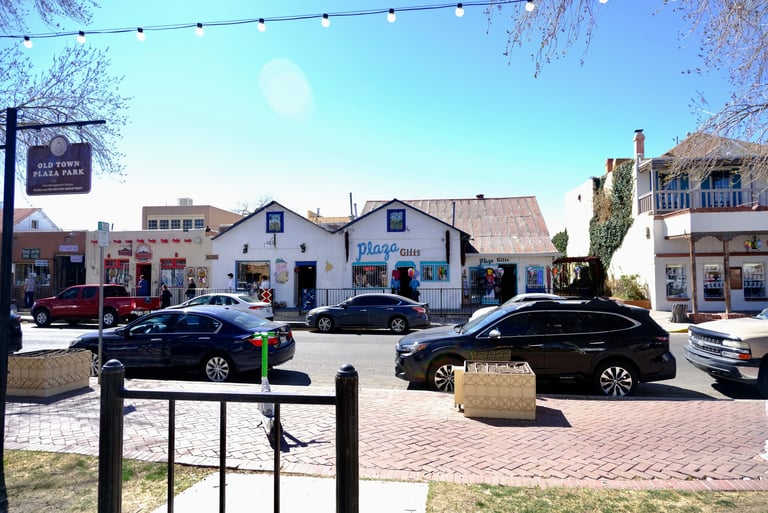
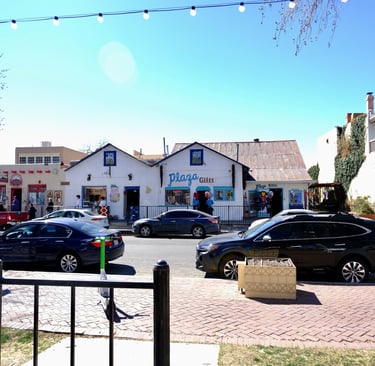
Despite the railroad moving the business center of the city, Old Town was and remains a cultural hub for the city, showcasing a strong mix of Spanish, Mexican, and Native American influence. This starts as you enter the main area for Old Town which displays a strong Pueblo Revival or Territorial Revival architectural presence despite most of the buildings in the area dating back to the 1870s-1900s. Many of the buildings were converted when adding other modern amenities like electricity and air conditioning. I’m not necessarily complaining about this change, however. The covered walkways of the area are rather nice under the hot desert sun, and many restaurants take advantage of these areas for outdoor dining.
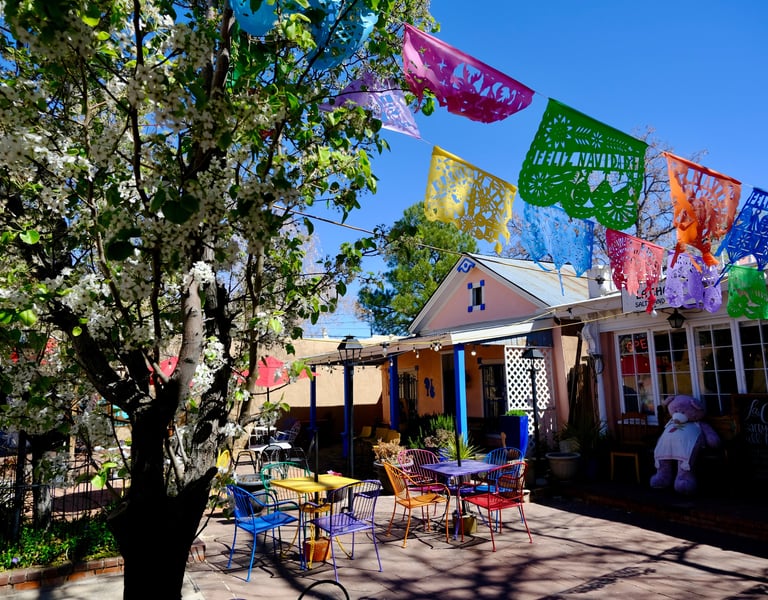
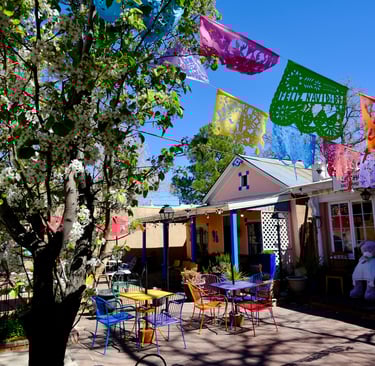
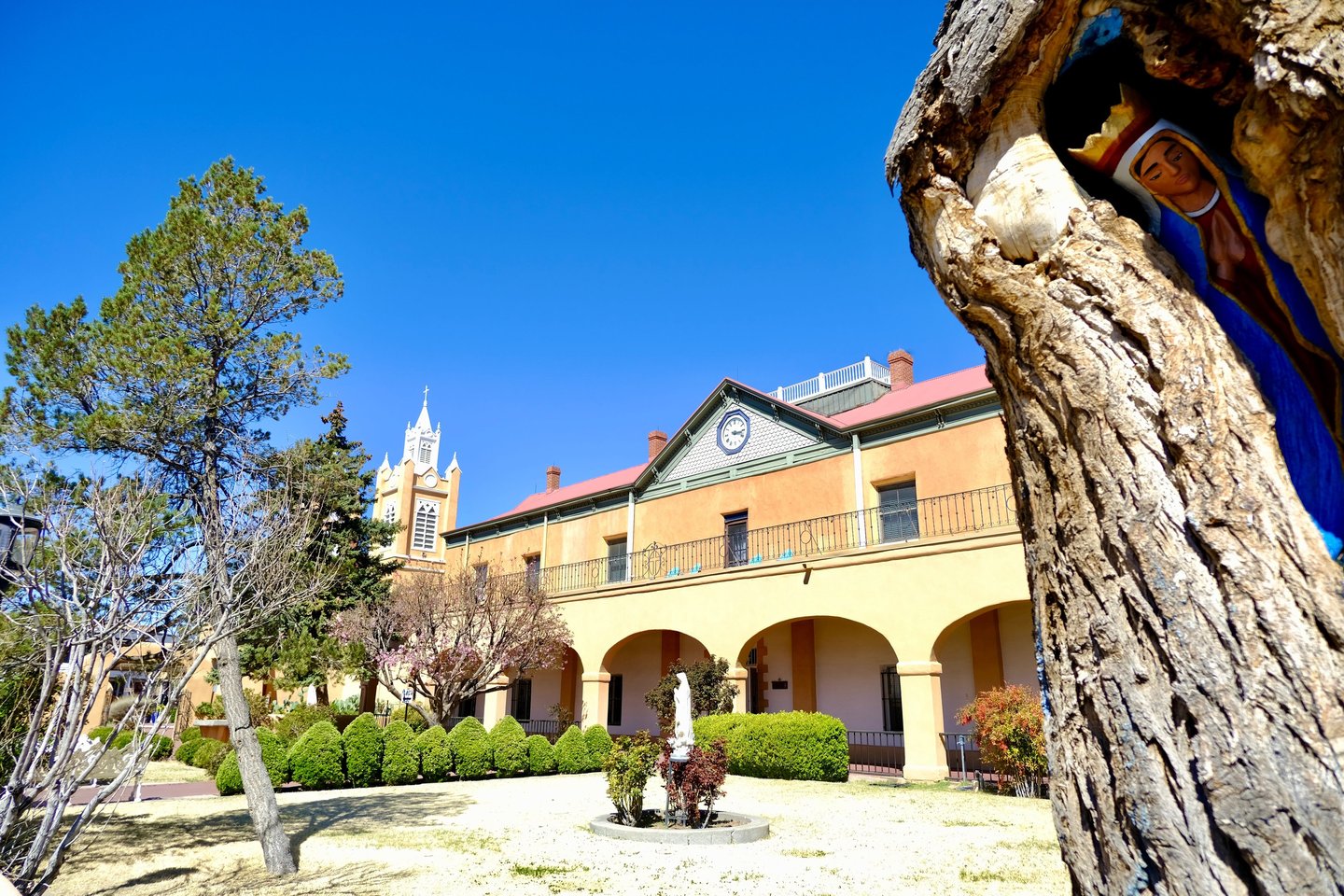
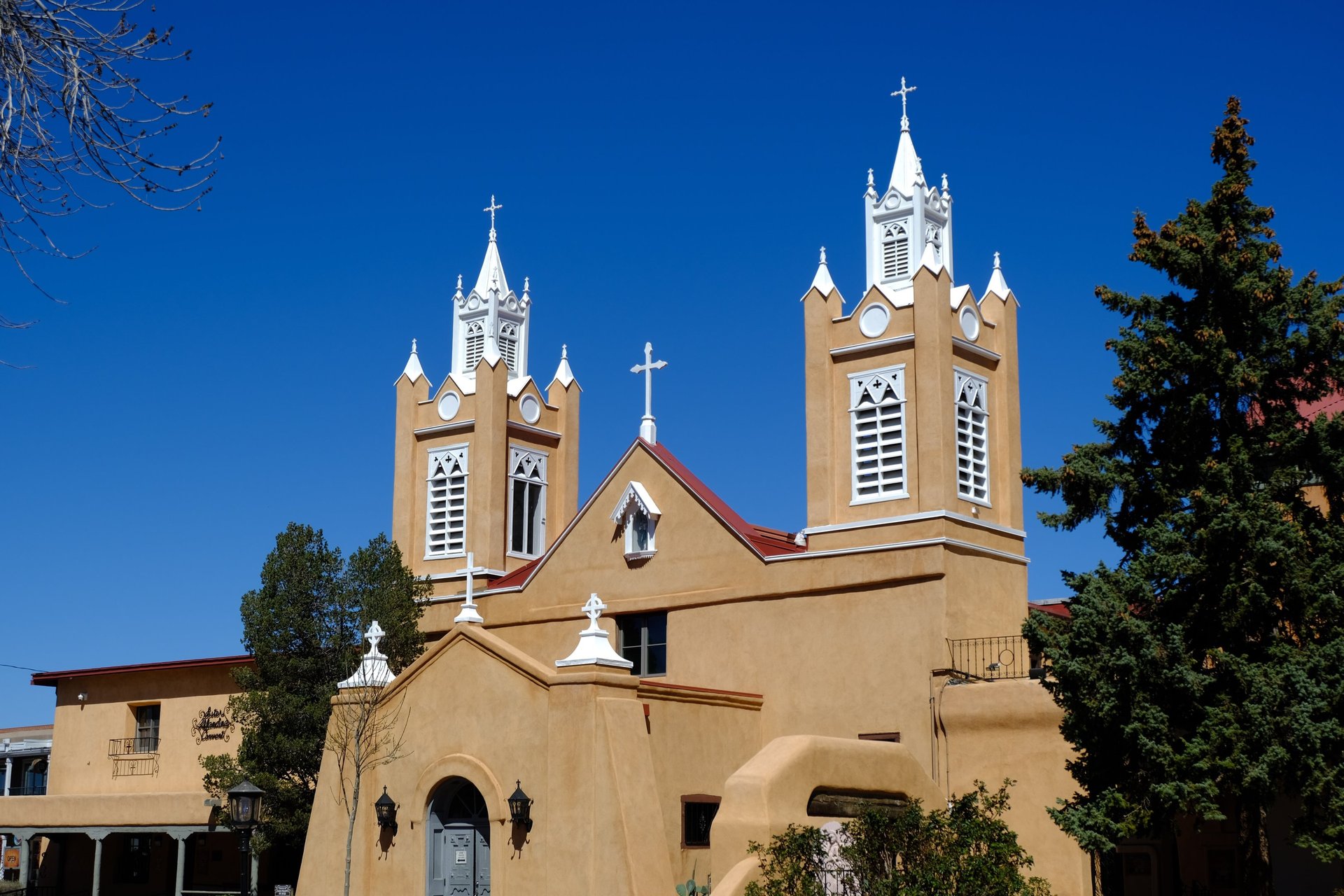
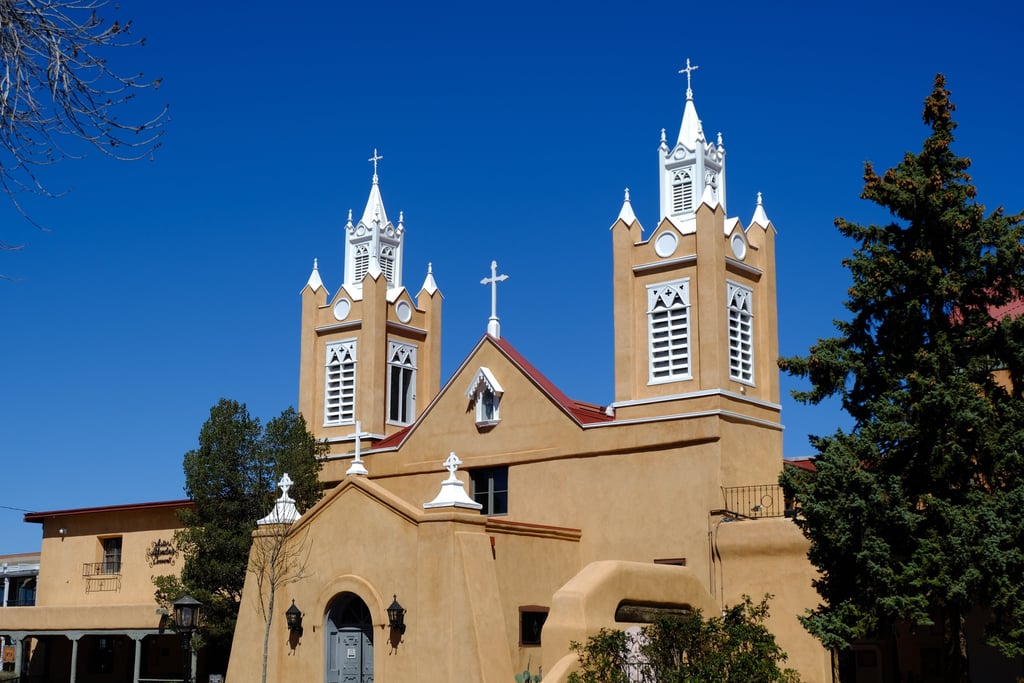
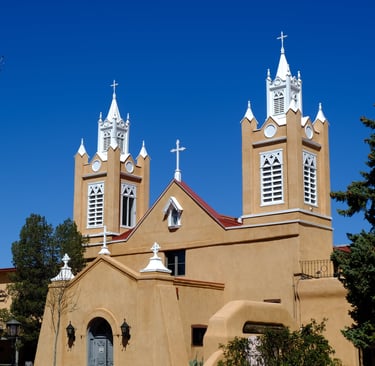
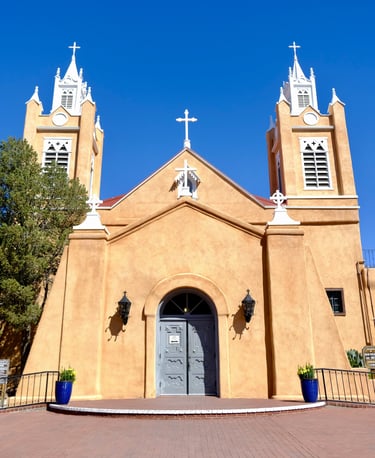
It does not take long to reach the center of Old Town as there is only a block or two from the center to the periphery of the historic district. At the center is a large plaza with a gazebo and several historic markers recounting stories from the city’s past. On the north side of the plaza is the impressive Inglesia San Felipe de Neri, the only original Spanish Colonial building in Old Town. With construction of the church in 1793, the second one to stand on that site, the architecture is a unique mix of Spanish Colonial and Pueblo with Gothic elements included like the church’s spires. The church houses a large congregational hall, a small museum, and several other buildings nearby like a school and convent. When I was visiting I did get to walk through the church but I was unable to take photos due to the church’s preparations for Easter.
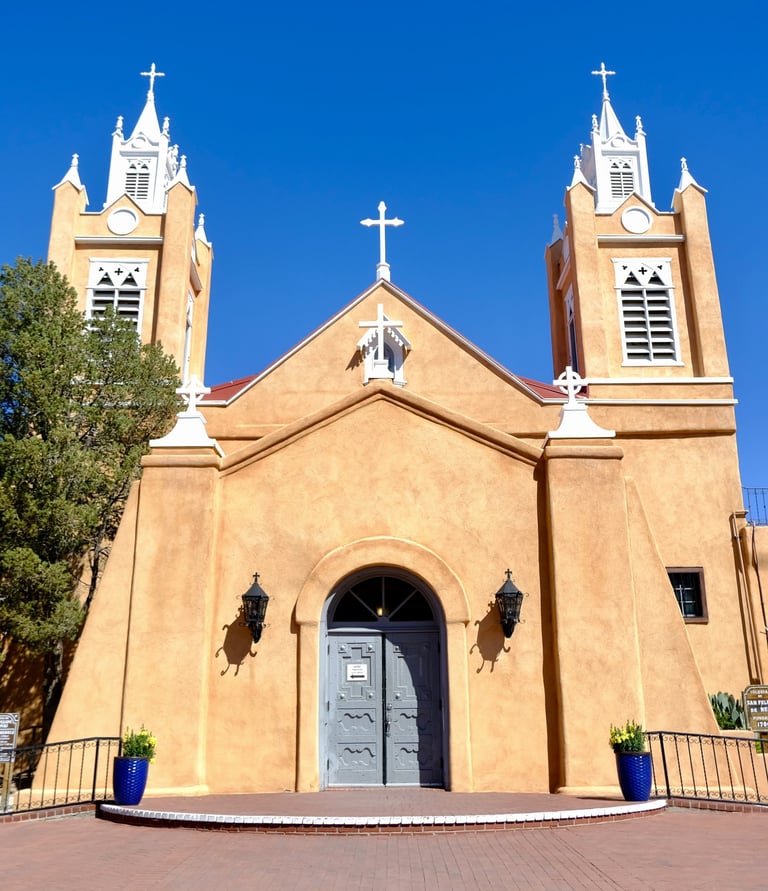
The other buildings surrounding the plaza are nicely decorated too, even if they are not originally of the style. There are plenty of galleries, restaurants, and tourist shops around, but that was part of my problem with the area; it just felt touristy there. The entire south end of the plaza was dedicated to these tourist shops, for the most part selling very generic tourist wares. A block to the east of the central plaza feels even worse, more like a strip mall that just so happens to be built in a Pueblo Revival style, and not quite as well maintained as the buildings closer in. Not to be too pessimistic, I did appreciated the western side of the plaza. Between the old post office, the well landscaped Heart of Old Town center, and the Noisy Water wine shop which stood out as not attempting to be a converted Pueblo Revival style building like the rest of the plaza but instead remained in its original (yet admittedly white washed) Colonial Revival style that reminds me of the construction one would see in a modest town of the 1920s or 30s.
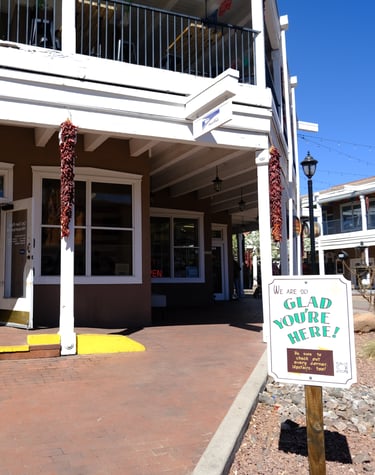
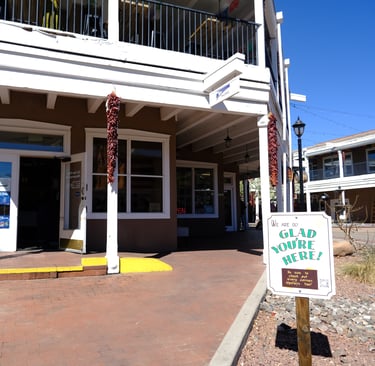
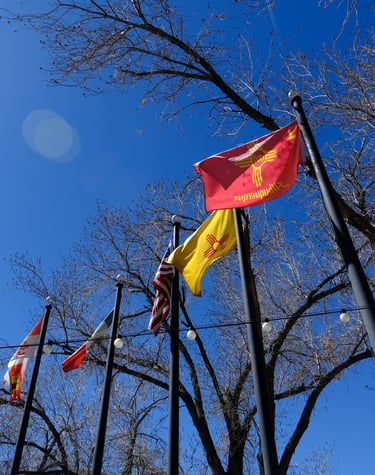
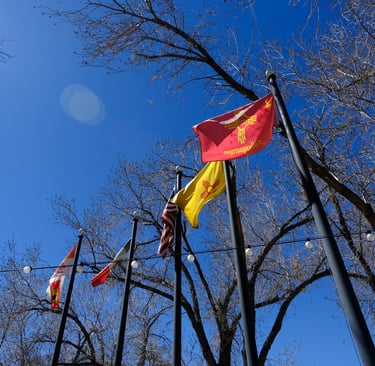
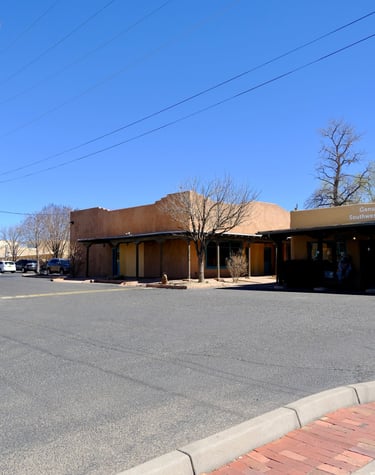
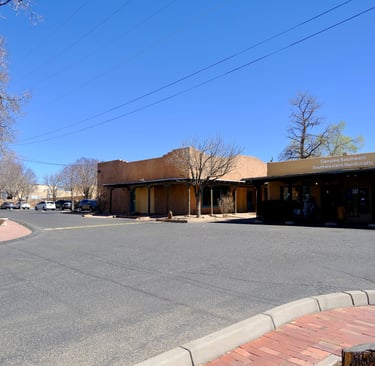
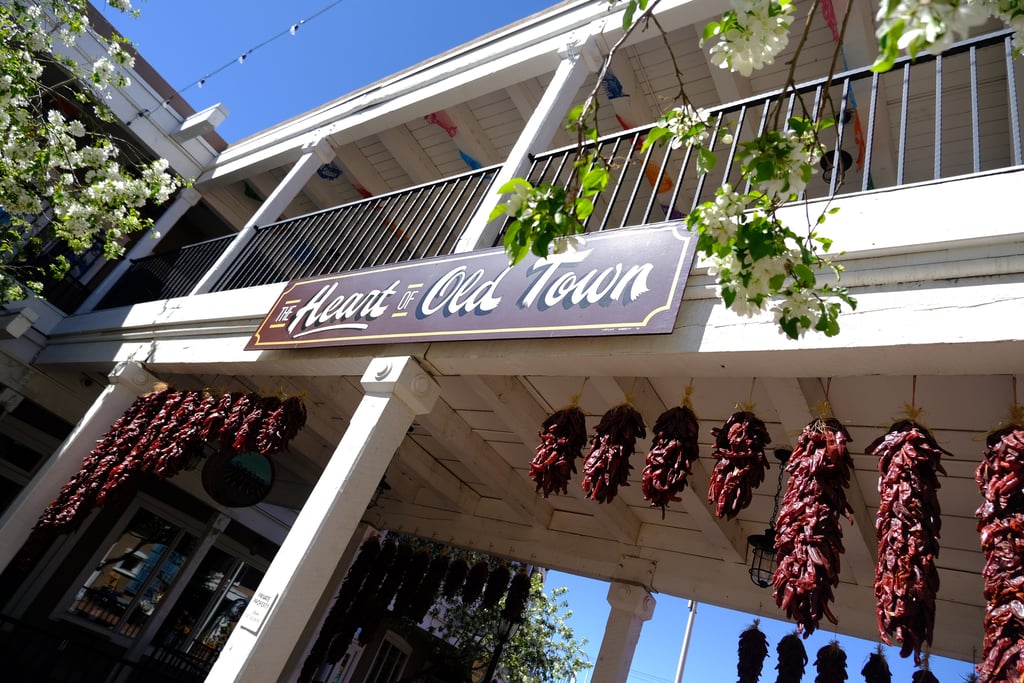
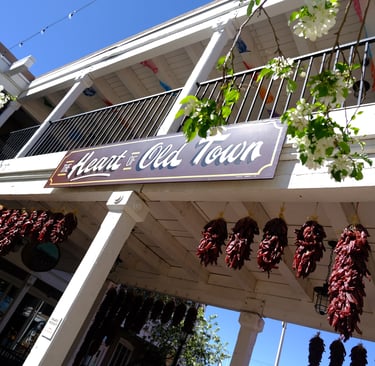
Around the plaza were lots of chilis hanging on ristras, one of the most important cultural symbols of New Mexico. There were also plenty of hanging paper decorations from the regions Mexican heritage, and plenty of string lights. In the green space on the plaza’s western side are five flag poles showing the various flags to have flown over the city: Colonial Spain, Mexico, the United States, New Mexico, and the city flag of Albuquerque. Some of the buildings did seem a bit worse for wear, the grass worn down in areas, and there were way more cars that I would have expected for perhaps the most important pedestrian area for the city, but on the whole the area felt like it had at least some level of care to it.
Chilis and Shells
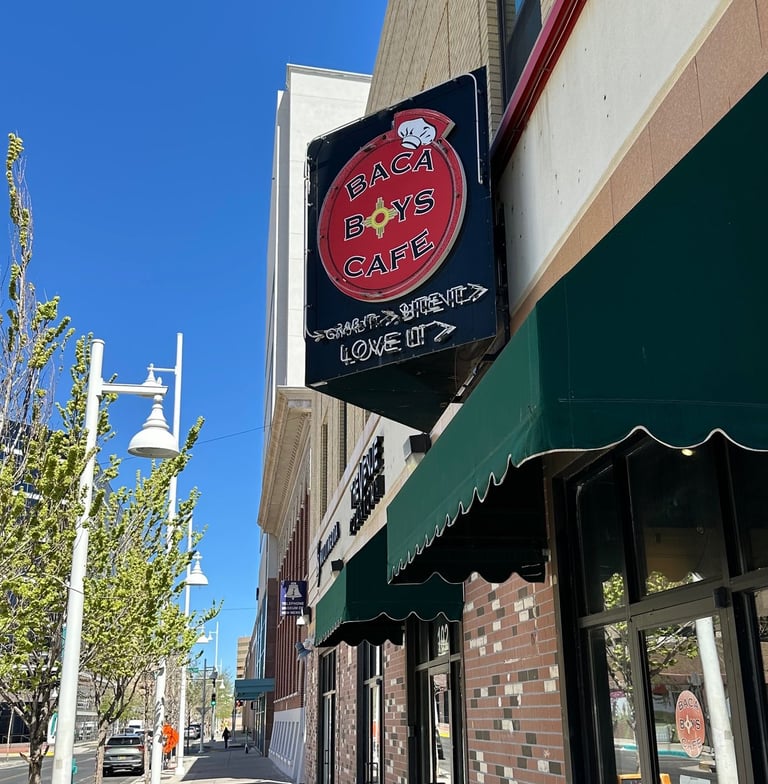
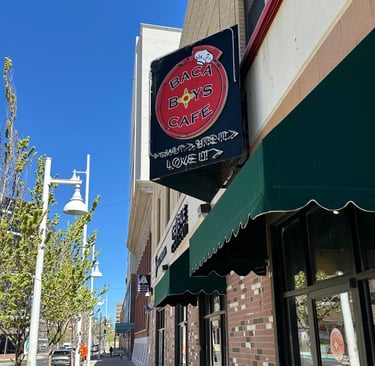
Finishing up my walk around Old Town, my hunger led me to seek out some of New Mexico’s famed cuisine. Taking the ART back into the downtown area, I wandered the blocks for a while, looking for a restaurant with an appetizing looking menu featuring local ingredients. Finally, I stumbled upon Baca Boys Cafe located along Central Ave, about a block down from the KiMo Theater. It was a small restaurant inside with no more than ten tables and a row of booths along the wall, but it smelled wonderful with the heat of the chilis melding perfectly with the savory slow-cooked pork and beef. I ordered some chicken green chili enchilada Montana’s and thoroughly enjoyed them. With the side beans and rice (never turn down beans and rice, they make the meal), I was completely satisfied. The chicken was expertly cooked and the chilis provided just enough spice, even when green, to know they are the real deal.
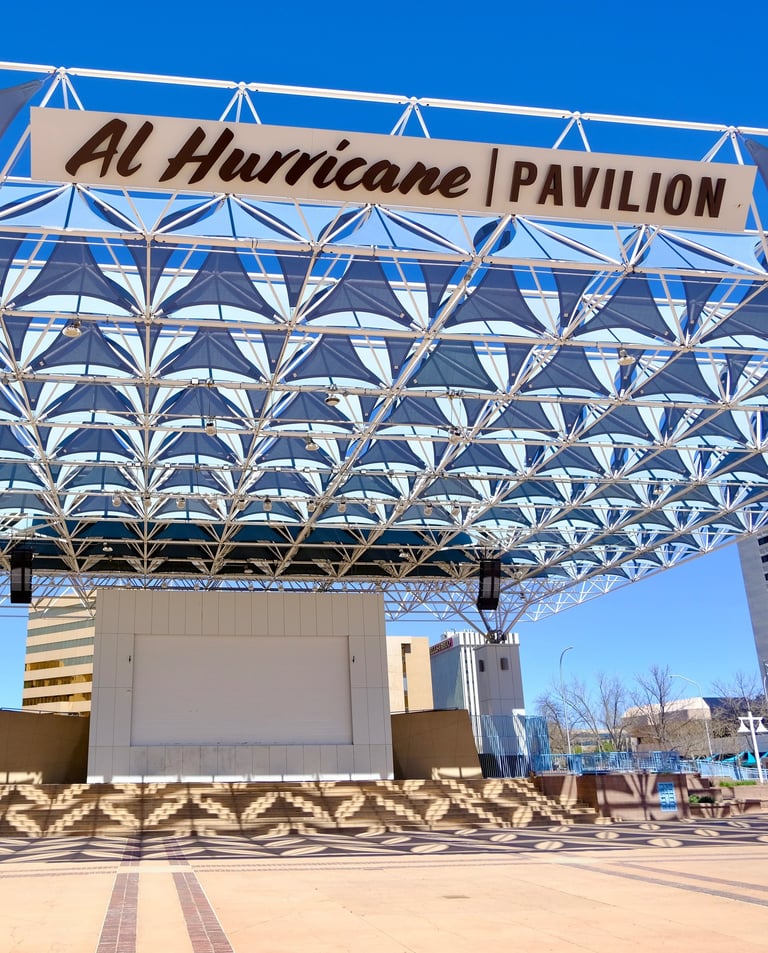
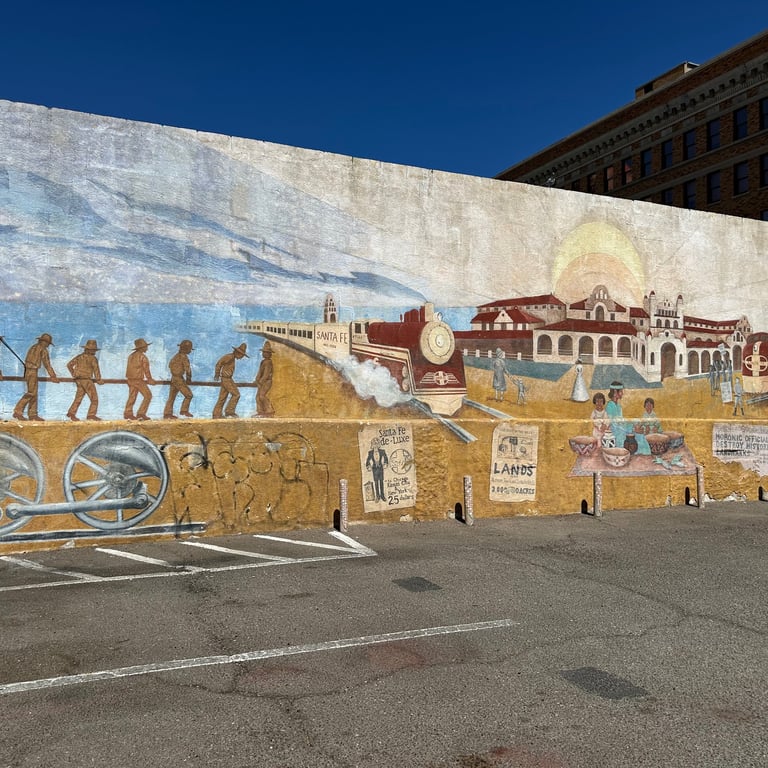
After my meal I was set to explore around downtown a bit more. There were a number of murals dotting the sides of buildings displaying the history and cultural influences on the city, which I appreciated. At one point I ended up at the Civic Plaza on the northern edge of downtown. Located between city office, the Kiva Auditorium, and Albuquerque Plaza towers, the Civic Plaza was designed to be a focal point of the urban life in Albuquerque. It was failing its job. Spectacularly. It just felt dead when I was there, like a shell of what should have been a great civic space. Granted it was a weekday, but I only saw two other people in the 20 or so minutes I was there. There was a very nice looking and large playground located under some sunshades, a necessity given the blistering New Mexican sun, but it just sat empty (minus when I made brief use of the swings). Al Hurricane Pavilion sat quiet at the northern edge of the plaza, and judging by my web search which yielded only mapping service results and a single article commemorating the naming of the pavilion, this was its natural state.
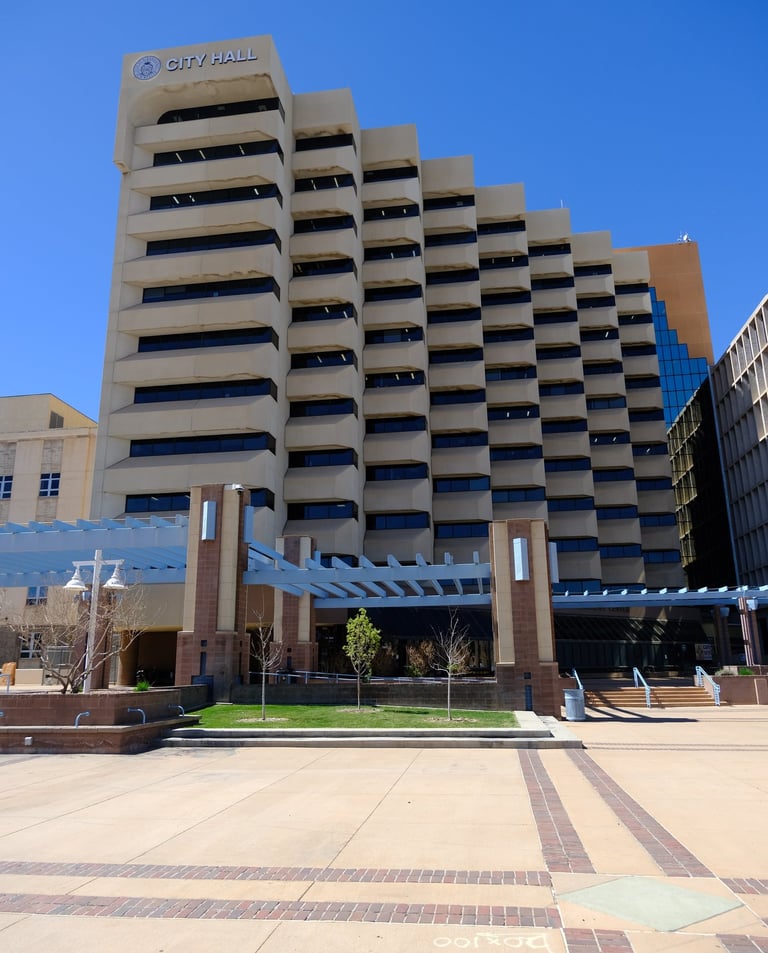
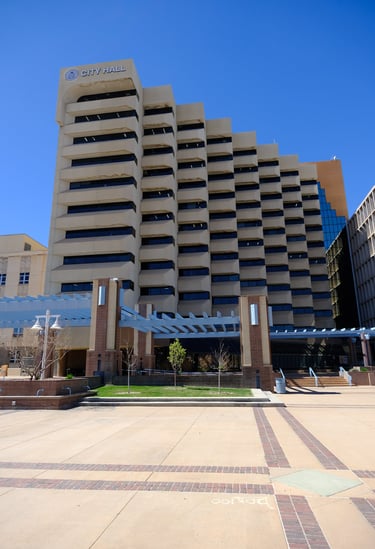
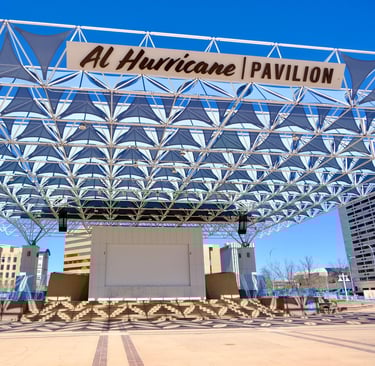
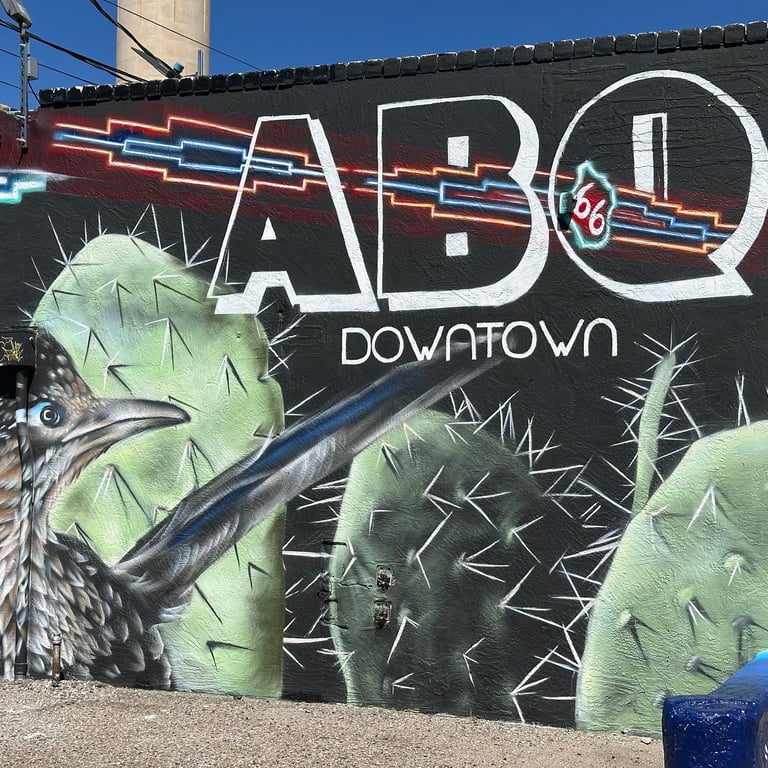
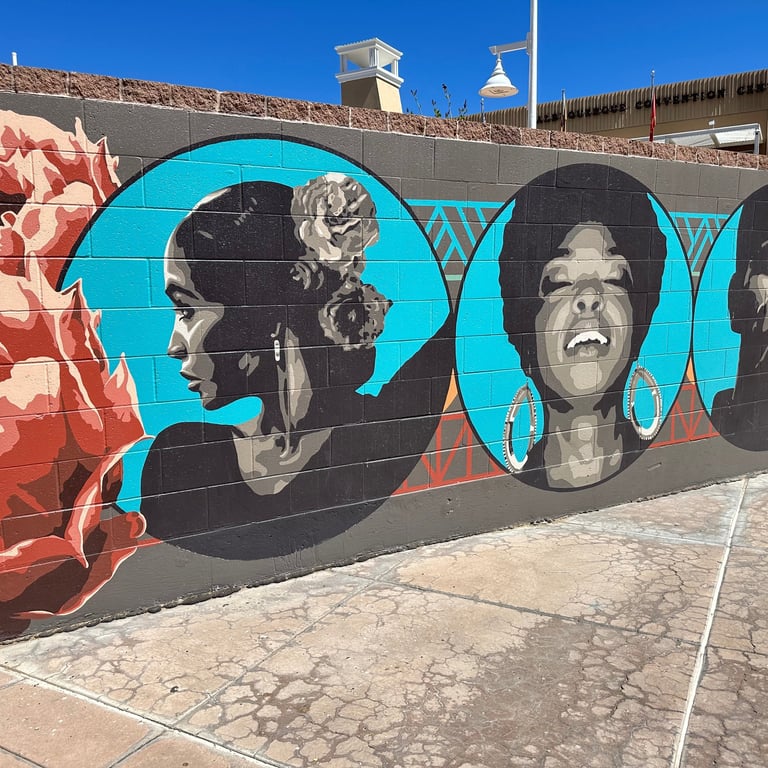
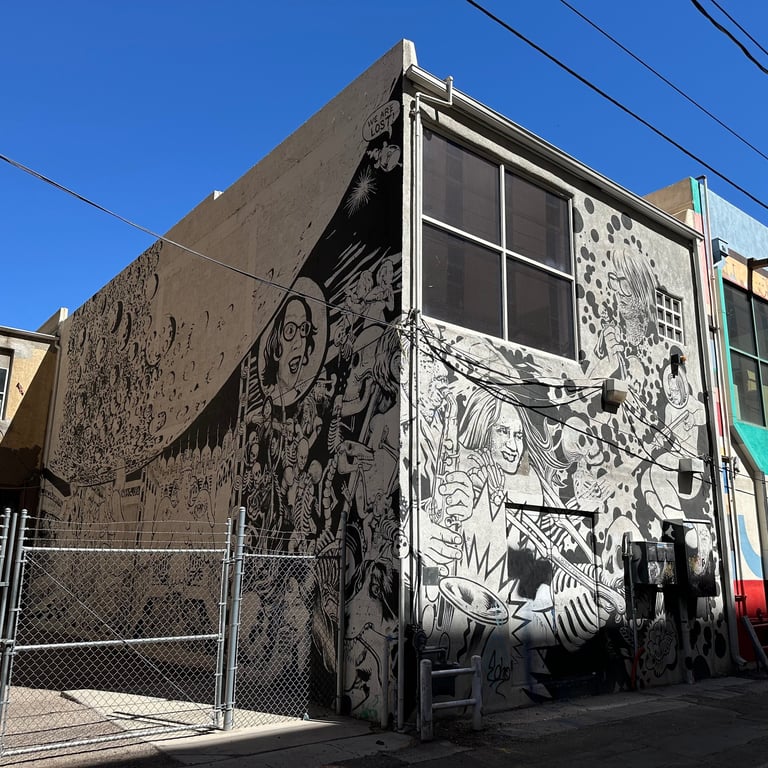
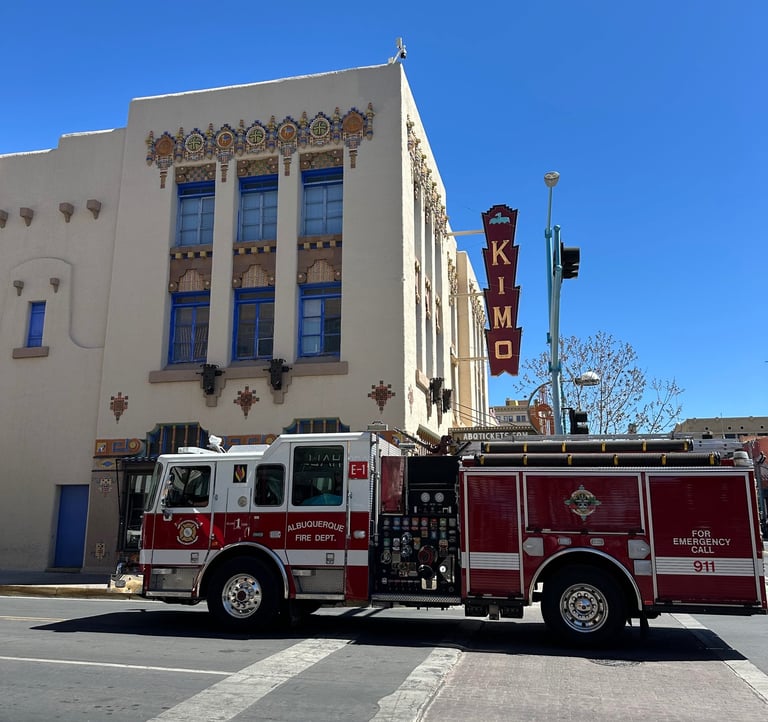
The feeling I had walking around Civic Plaza was on the whole what I felt around the city. The sidewalks were desolate, cars passing by in search of more interesting destinations. Albuquerque has some nice spots, but those paled in comparison to a downtown that did not seem lively while I was there. It’s a city that feels like it’s designed for commuters to drive into, work in the office buildings, and then drive back to the suburbs. There just is not much to do within the city itself, other than a few restaurants that were open for lunch. The only exceptions I saw were the city library, which was admittedly quite nice, and thee KiMo theater, a shining example of Puebloan Deco architecture.
Even with the theater, however, the city just felt dead. Most of the attractions the city advertises in the pamphlets given out at the airport are not located in the downtown district. Some are not terribly far away, like the BioPark Zoo which is located about a kilometer and a half (1 mi) from the transit center, or the Indian Pueblo Cultural Center three kilometers (2 mi) north. Even more of the attractions are nowhere near downtown with no way to get there without a car. I wanted to visit the Sandia Peak Tram, the highest rated attraction on TripAdvisor for Albuquerque, but it was completely inaccessible by transit and would have cost over $50 round trip to get there by ride share before even including the cost of the ticket. I was just not impressed with Albuquerque from a city perspective; it’s people are very nice, and they have a stellar cultural tradition, but the city doesn’t feel like it’s designed for embodies that tradition. It just feels hollow.
Feeling somewhat discouraged with my travels here, I made my way to the Alvarado Transportation Center to catch a bus east from downtown. The transit center looks nice, but it does not have publicly accessible restrooms which feels like a necessity as not only a public transportation hub for the city buses, but also as a major commuter and intercity rail station. There’s also not much to do nearby, despite being located within the main downtown area. I waited about 10 minutes for the next ART bus to arrive, and soon was back off to the east side of town.
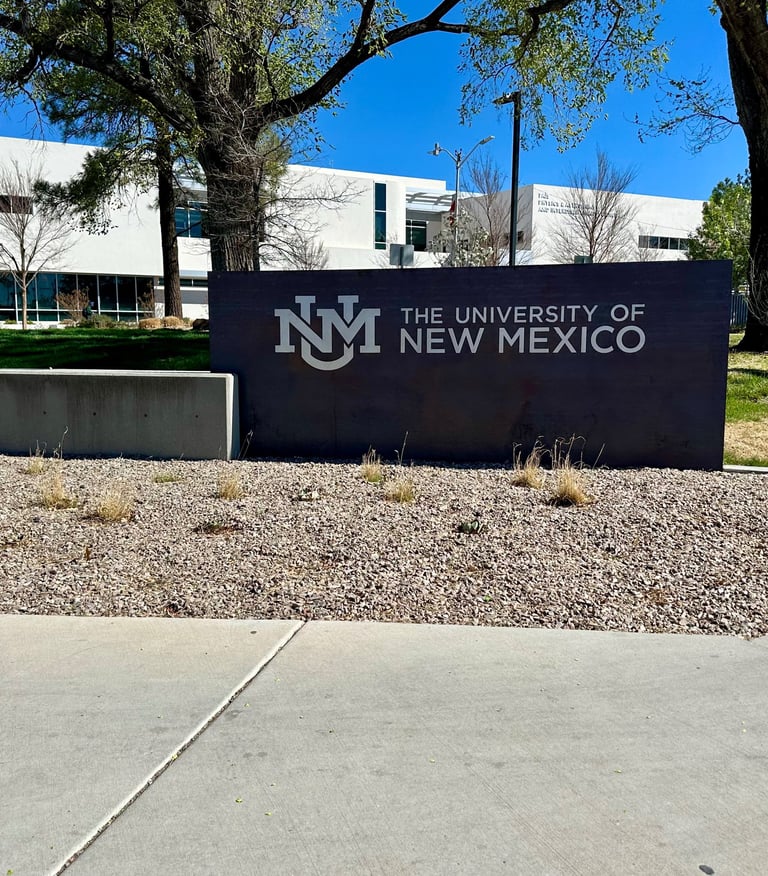
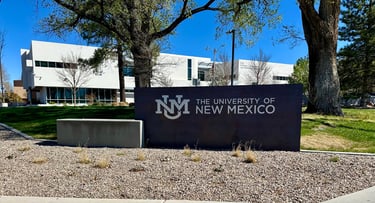
I disembarked again at University of New Mexico, having another hour or so to kill before I needed to get to the airport for my flight, and I always enjoy walking university campuses. The university campus pleasantly surprised me. It is a nice campus, reminding me somewhat of the university that I attended in Michigan despite the great distance between them and the drastic change in environment. This was by far the most lively place I saw in Albuquerque with students and faculty swarming everywhere around campus. I stopped by the student center and bookstore, grabbing a sticker while I was there, and saw it being well used by students in groups having fun together or sitting alone deep in study. The campus also has a very nice bus stop area for the many city buses and parking shuttles that make their way to campus since the university primarily acts as a commuter campus, and I graciously used the spot to avoid sitting in the sun after having walked around in it for much of the day. By the time my 50 bus to the airport arrived, I was was in better spirits.
Leaving Albuquerque
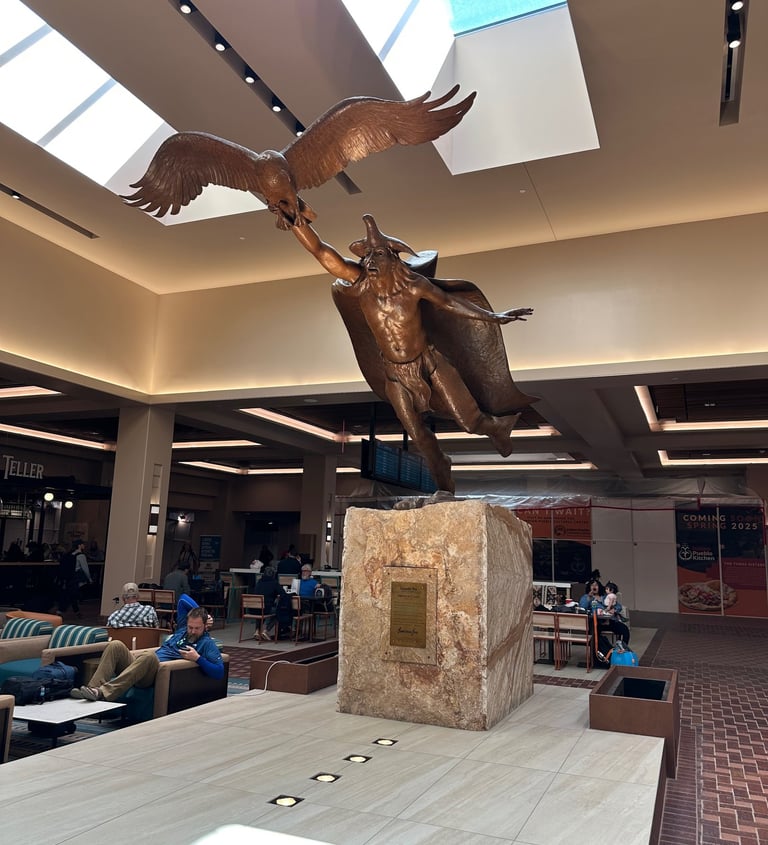
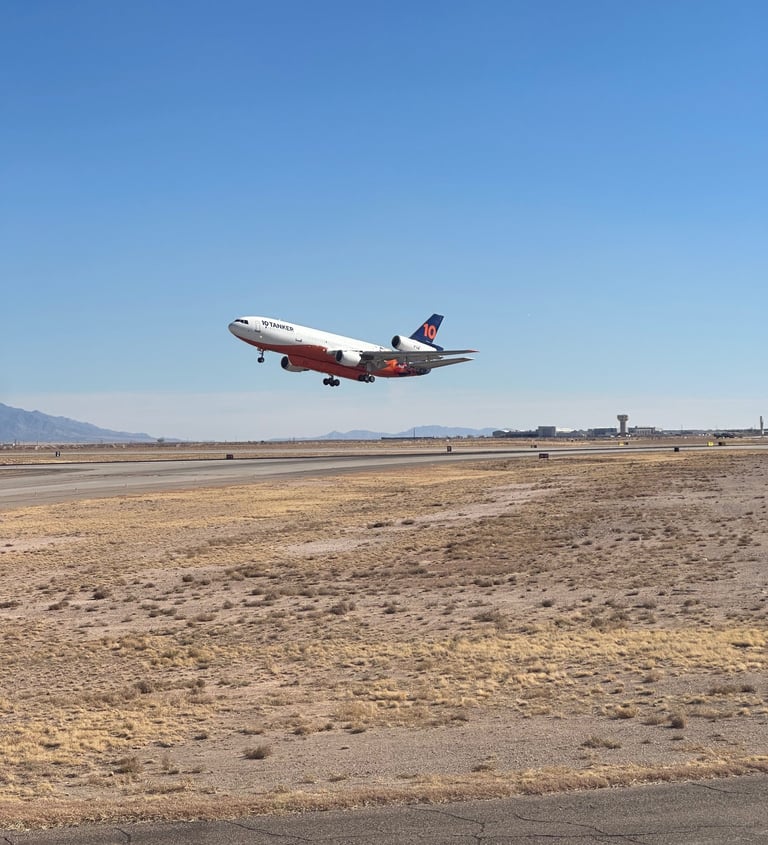
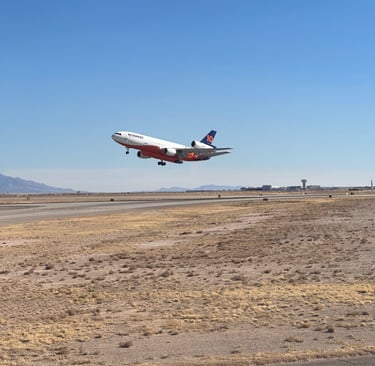
The bus ride back to the airport was uneventful, and unlike my ride from the airport earlier in the day there were several other people making the trip to the end of the line with me. A few of them even had suitcases marking them as fellow travellers instead of airport workers commuting in. At the airport it felt more lively inside than earlier in the day. The security lines were very manageable and the agents friendly enough, definitely a fine experience for what airport security is. The food court just pas the checkpoint was very busy with hardly a seat available, and there was even a live saxophonist performing next to a rather impressive statue. I arrived at my gate about 30 minutes before boarding started, the airport incredibly easy to navigate, and I can confirm that the leather-cushioned seats I mentioned earlier are quite comfortable compared to the average airport seating experience. There was one last surprise for me, as on taxi out to the runway we were given front row seats to a DC-10 fire fighting aircraft performing touch-and-go landings, a very rare sight to see from such a large aircraft.
I had quite a list of my troubles with this city, and I think it’s fair to say Albuquerque just did not impress me. I do not think, however, that it is fair to just New Mexico on the whole this way. As I was reviewing the rest of my report before writing this conclusion, I noticed just how much I talked about the culture of the state. It feels so unique compared to most other regions of the US. The urbanism of Albuquerque may not be up to par with other US cities, let alone internationally, but there is still plenty worth seeing. I want to visit New Mexico again, but this time to see other cities like Santa Fe, or the various natural areas around the state. So do I recommend visiting Albuquerque for the city itself? No. But do I recommend going to Albuquerque to see what else the state has to offer? Yes, whole heartedly in fact, and I plan to do so in the future in search of new and more exciting adventures.